


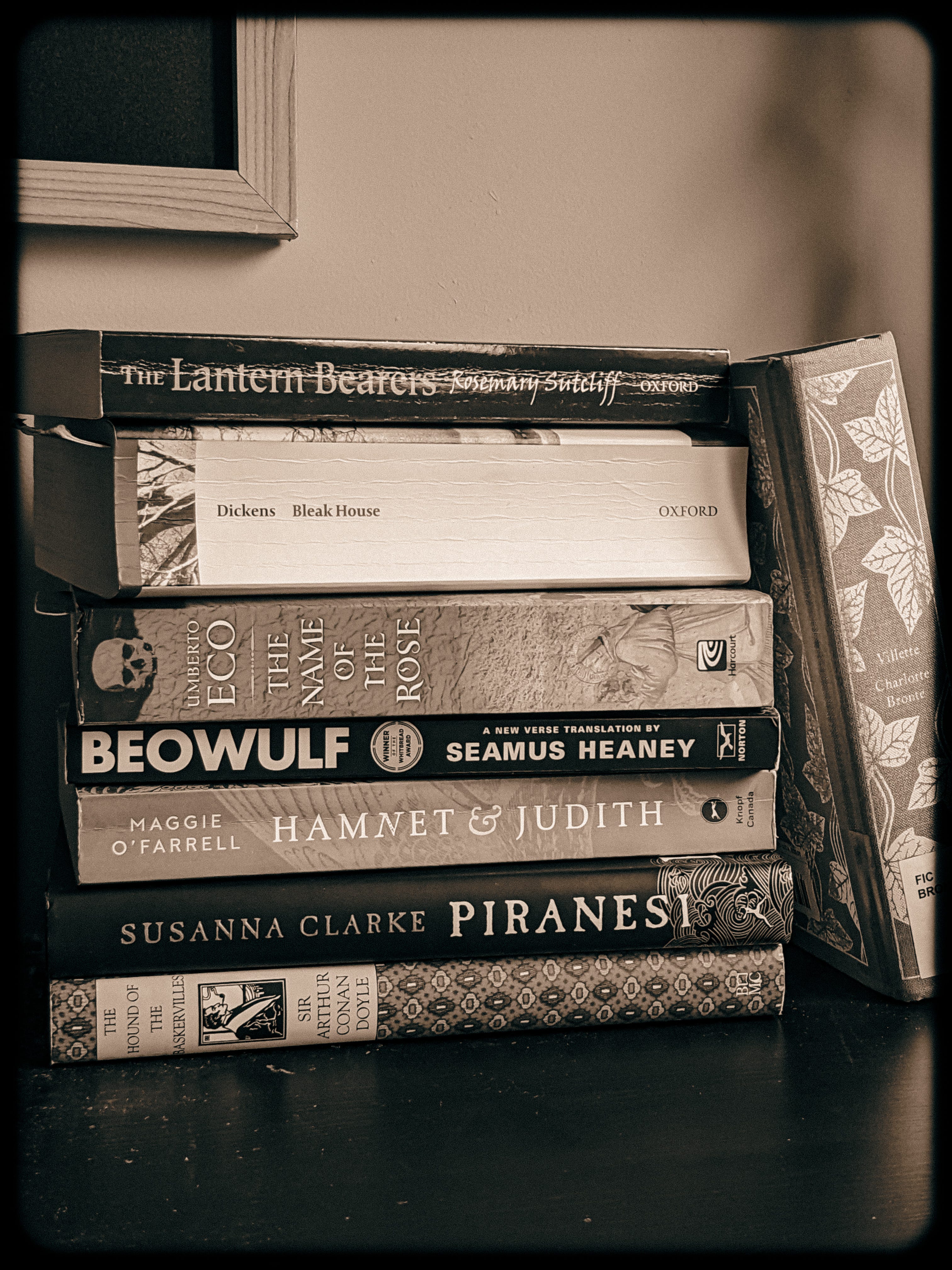
This is something of an experiment for me. I’m not sending it out by email (as a proper post or anything) since I don’t know whether or not I intend to continue it. But I thought it might be interesting to make up a summary of what I’ve read and written and watched this month, in part as a sort of journal or memory aid. Think of it as a list with extras.
Books I read:
Bleak House (re-read)
I first thought of re-reading Bleak House when I came across this fascinating essay on Esther Summerson. I confess I used to be of the opinion that “Dickens couldn’t write women”, and am now something of a moderate, mellowed by age, but I shall never forgive him for Agnes Wickfield.
I’d forgotten just how apt the book’s title is - the story itself is a vast house of many different styles, farce and tragedy and mystery and legal drama. The characters are unmistakably Dickens’, but they are generally less vivid than those in, say, David Copperfield. I found this highly enjoyable, though, as it allows the setting and plot to gain some ground and not be entirely overshadowed by various personalities.
What else can I write? It’s a November novel, full of things and days that drag on and on, of sleet and rain and snow, long journeys in the cold, and vast, empty corridors. I remembered it less well than I thought, but I remembered how it felt to read it, as if you too felt the cold creeping in.
Can I just say it, though? I’m going to. Death by spontaneous combustion. All right, I’m done.
Beowulf (trans. Seamus Heaney) - re-read
My brother and I used to debate over who would win in a fight between Jaws and Grendel’s mother. Grendel’s mother always won, primarily I think because she could get out of the water and Jaws (hypothetically) couldn’t.
Why did we do this? I don't know. It made more sense at the time.
The Hound of the Baskervilles (re-read)
“He was running, Watson—running desperately, running for his life, running until he burst his heart—and fell dead upon his face.”
“Running from what?”
“There lies our problem….”
My first memory of reading this is on Christmas afternoon, balancing the Complete Sherlock Holmes on my lap while it rained outside, the light growing fainter and fainter until I could barely see the print. But I wasn’t there, I was on the moor, hearing the hound for the first time, watching clouds pass over the moon from the shadows of another house.
Funny, the things that stick with you.
The Name of the Rose (re-read)
My Latin is no longer good enough for this book, was the first thing I realised. But one can get along well enough with a dictionary for the most important bits.
Otherwise good, much shorter than I remembered. The destruction of the library made me just as sad the second time round though. I never can get over the loss of books in stories.
Still need to look up concupiscible/irascible appetites because I cannot for the life of me remember the difference and it’s going to take a while to figure out, at least from what I remember of Aquinas.
Hamnet (re-read)
Thanks to Jill for the recommendation!
As the fabric runs through her fingers, as she puts each seam together, as she flaps out the creases in the air, her body remembers this task. It takes her back to the before. Folding his clothes, tending to them, breathing in his scent, she can almost persuade herself that he is still here, just about to get dressed, that he will walk through the door at any moment, asking, Where are my stockings, where is my shirt?, worrying about being late for the school bell.
Hamnet, pg. 289
Grief fills the room up of my absent child,
Lies in his bed, walks up and down with me,
Puts on his pretty looks, repeats his words,
Remembers me of all his gracious parts,
Stuffs out his vacant garments with his form;
Then have I reason to be fond of grief.
King John, III, iv
The Lantern Bearers (re-read)
One of the things that has always amazed me about Rosemary Sutcliffe’s writing is how vivid it is. Open one of her books and you can almost smell the atmosphere, or taste the weather. She wrote about dying worlds, mostly, things coming to an end, so I always find myself reading her when I first feel the cold coming in.
At the Mountains of Madness (first time)
I read this for a book discussion, and during slow periods at work, because I thought it was fairly short and wouldn’t require much commitment…. cut to me sitting on a five-gallon pail, glued to the page (not with alien slime, I feel it must be said) with my tea quickly growing cold…
I’ve never read Lovecraft before, so this may (or may not) be an accurate judgement, or it may be very obvious, but the most horrifying thing by far was not the unknowably ancient and decadent aliens, nor the gore, nor even the inability of the slime-creatures to speak except in the words of their abhorred and murdered creators. It was the unsettling-ness of the city, the nagging sense of evil which grew and grew, the slow acclimatisation of the characters to greater and greater horrors.
I doubt it will give me nightmares, but if I dream of it at all I will dream of that city.
Gaudy Night (re-read)
I was supposed to re-read Gaudy Night in November, but I finished my October list early and started this in the meantime. I loved Dorothy Sayers because I enjoyed Agatha Christie, and I loved P. D. James because, in particular, I loved Gaudy Night. It was the first detective story I ever read that set out to be a novel too, with complex characters, themes, and a vivid setting, as well as a classic detective story (with a crime, suspects, etc.). It was also the first book I read that seriously tackled what it means to be a scholar and spend one’s life at it, at a time when I believed that was what I wanted most. I chose otherwise and for other reasons than the difficult reconciliation of the head and heart, but I do come back to the book every once in a while and wonder whether it played any part in that decision.
“Do you find it easy to get drunk on words?”
“So easy that, to tell you the truth, I am seldom perfectly sober….”
Villette (first time)
I think this is probably better the second time round. I found it fairly entertaining, especially character-wise, and not by any means difficult to get through. I found in Lucy Snowe a quality not present in Jane Eyre (that I wished had been there), a coolness, stubbornness, a natural inclination not to be influenced unduly by others. Probably not everyone’s cup of tea but I enjoyed it. I’ll wait a couple of years, I think, and then read it again.
The Medieval Mind of C. S. Lewis (first time)
I came across this book in a review by Henry Oliver of The Common Reader (I’ve linked it here). It was, as he said, a marvelous book, and I found it particularly interesting when read at the same time as Piranesi (more on that below). It makes clear one of the most important facets of Lewis’ thinking; namely, that we should recapture the spirit of the Medieval world, without destroying the modern world we now inhabit - to regain the good we have lost without losing the good we have since gained. The best thing about the book is its clarity, of style (which Lewis himself was famous for), and of purpose. The theme is the mind of C. S. Lewis and the books that caused it to be so, and that is what you get, clearly and intelligently, in 165 pages.
Piranesi (re-read)
I had a vague idea that C. S. Lewis had influenced Clarke somehow from reading Jonathan Strange and Mr. Norrell, but could not articulate it until I read Piranesi. The epigraph is from The Magician’s Nephew - and in some way the whole book is an articulation of an idea from The Magician’s Nephew. That is to say, what if there were other worlds, which contained reflections of the one we know as our own?
All around me doors into other worlds began appearing but I knew the one I wanted, the one into which everything forgotten flows. The edges of that door were frayed and worn by the passage of old ideas leaving this world.
I might have said, then, that Clarke’s House in Piranesi is a world of halls, of doorways giving on marvels. And like the World-Between-Worlds in the Magician’s Nephew, it is a kind world, but one that effaces all memory of life elsewhere.
When, however, I read the book this month, I was also reading The Medieval Mind of C. S. Lewis, where I found part of a passage from That Hideous Strength:
“No,” said the Director in a still louder voice, “that cannot be done any longer. The soul has gone out of the wood and water. Oh, I dare say you could awake them—a little. But it would not be enough…. If it were possible, it would be unlawful. Whatever of spirit may still linger in the earth has withdrawn fifteen hundred years further away from us since your time….”
And in Piranesi I read:
“Once, men and women were able to turn themselves into eagles and fly immense distances. They communed with rivers and mountains and received wisdom from them. They felt the turning of the stars inside their own minds. My contemporaries did not understand this. They were all enamoured with the idea of progress and believed that whatever was new must be superior to what was old. As if merit was a function of chronology! But it seemed to me that the wisdom of the ancients could not have simply vanished. Nothing simply vanishes. It’s not actually possible. I pictured it as a sort of energy flowing out of the world and I thought that this energy must be going somewhere. That was when I realised that there must be other places, other worlds….”
In both cases, something has left the world - the animation of things themselves, or else, as Clarke’s character Arne-Sayles imagines, the knowledge of how to speak to them. Something has gone out of the world.
Clarke takes the idea one step further than Lewis; these things have passed out of the world, into another and through that other - and they have left something behind. The statues of the House in Piranesi are Platonic forms of ideas, virtues, vices, and emotions in our world, and one is also Mr. Tumnus.
This is really turning into an essay, which I didn’t mean to do. I might write about this in longer form sometime. In short form, though, Piranesi made me appreciate The Magician’s Nephew a great deal more than I had done, and it is of itself a wonderful book which never grows stale in re-reading.
Things I watched:
Endeavour (most of Series 9) - first time
I don’t want this to end so I am artificially dragging it out by not watching the final episode even though the second one had a bit of a cliffhanger ending. Will be very sad when it’s over as it and the original Inspector Morse series are some of the only shows I’ve ever seen that use classical music intelligently. It’s sometimes very weird (I remember one episode finishing with the characters stalking a man-eating tiger through a hedge maze) and not all the episodes are of the same quality, but on the whole it is (was) a half-decent show.
Loki (most of Series 2) - first time
I am enjoying this a lot more than I thought I would, and some of it is surprisingly profound. I haven’t caught up with the Marvel spectacle/debacle properly in years but I think this show is probably the best to come out of it in a while.
The Godfather Parts I and II (re-watch)
During the book discussion I went to on At the Mountains of Madness, we talked about horror movies, and I had some Thoughts (namely could the first 2 Godfather films be classified as horror movies? Why/why not?). At the end of Part 2 Michael Corleone is left alone with this horrible self he’s created, that has lost him everything, and over the course of both movies you see him building it up. Definitely a tragedy. My thought is maybe it could be classified as psychological horror. Maybe I’m just sad after watching both of them in the same week?
Things I Wrote:
This month I published three poems, many of which have been hanging around in drafts for a while, but all of which I am very fond of (though the second is probably my favourite):


I also published a short fiction piece which takes place in The Library of Time, an invented world I am hoping to spend more time in next year:

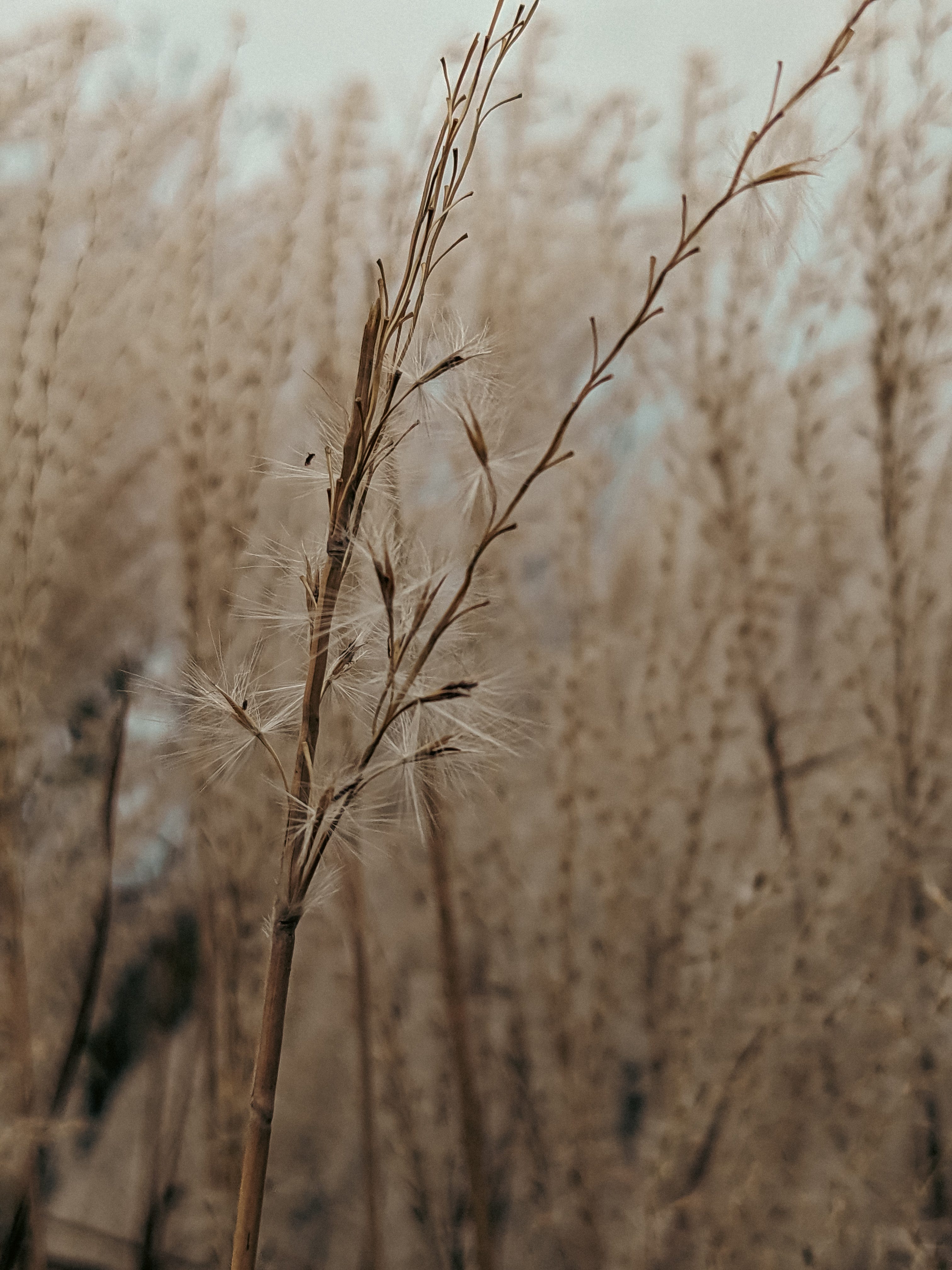
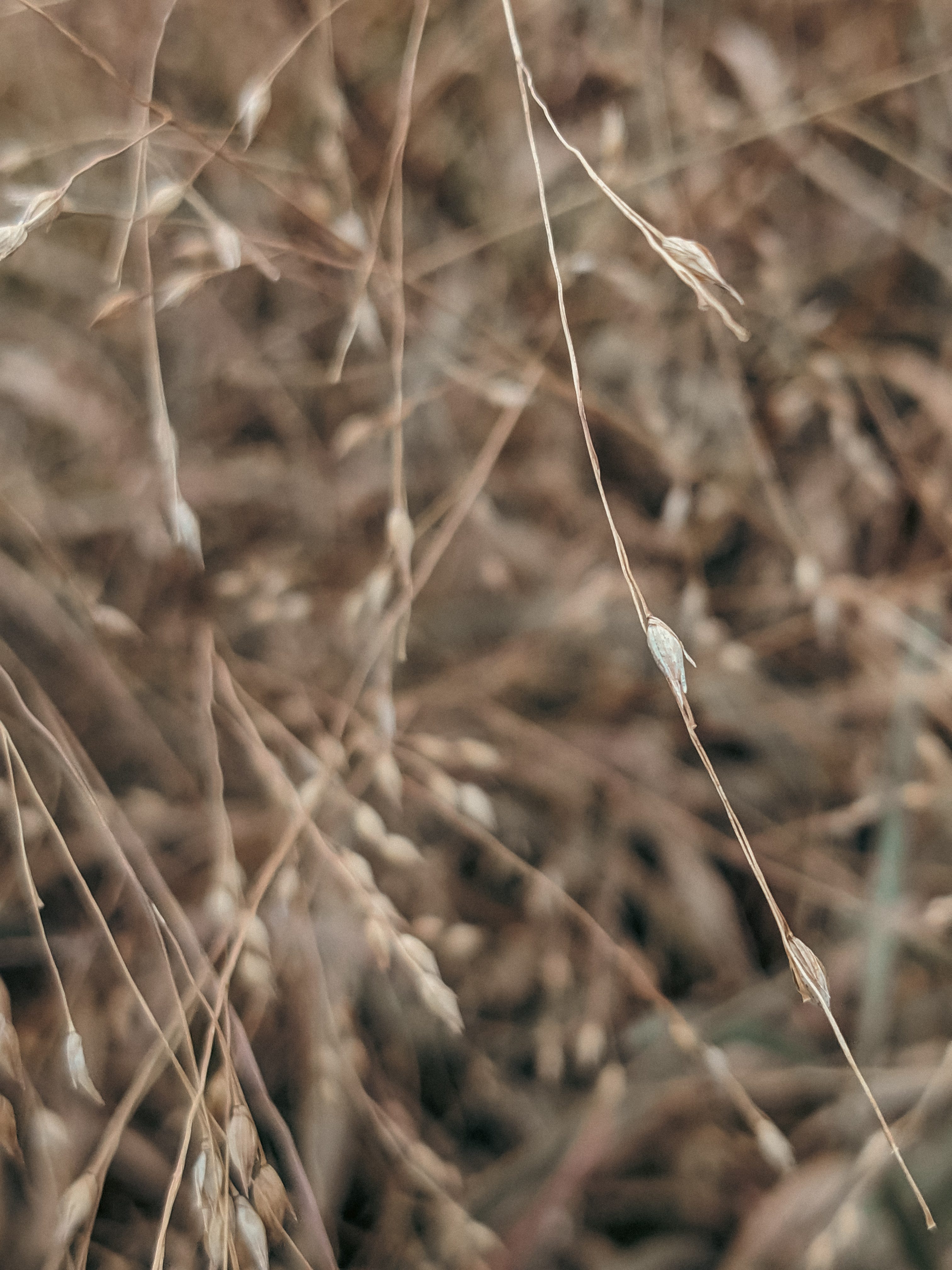
Pictures I took on a walk:


Parting Poem:
That time of year thou mayst in me behold
When yellow leaves, or none, or few, do hang
Upon those boughs which shake against the cold,
Bare ruin'd choirs, where late the sweet birds sang.
In me thou see'st the twilight of such day
As after sunset fadeth in the west,
Which by and by black night doth take away,
Death's second self, that seals up all in rest.
In me thou see'st the glowing of such fire
That on the ashes of his youth doth lie,
As the death-bed whereon it must expire,
Consum'd with that which it was nourish'd by.
This thou perceiv'st, which makes thy love more strong,
To love that well which thou must leave ere long.
Shakespeare, Sonnet 73
Song:
Thanks for reading!